
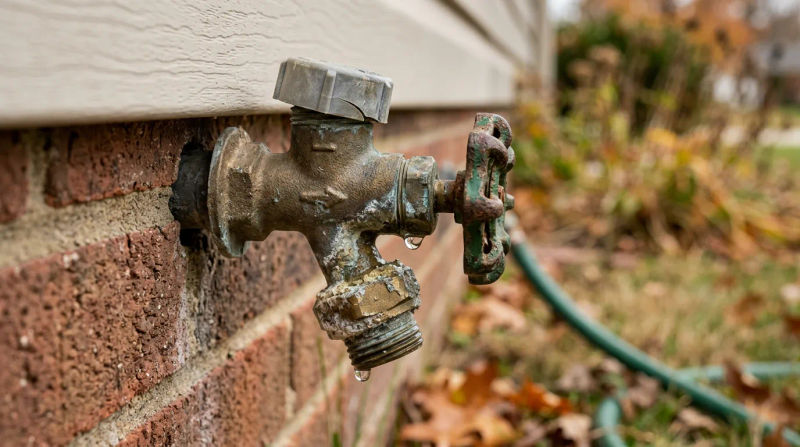
As the leaves begin to fall across Green Hill and you’re putting the garden hose away for the season, you might notice something easy to ignore: a slow, steady drip from your outdoor spigot. It seems minor, a tiny annoyance you’ll get to next spring. However, with the first Indiana freeze often arriving sooner than we expect, that small drip is more than an inconvenience - it’s a warning sign. As a property resolutions specialist, I’ve seen firsthand how a tiny pre-winter leak can escalate into a burst pipe and significant water damage inside a home once temperatures plummet.
Before you disconnect your hose for the last time this year, take a few minutes to inspect your outdoor faucets, also known as hose bibs. Identifying a problem now can save you from a major headache and expensive emergency repairs this winter.
Common Signs and Symptoms
Our trained technicians follow a standardized process to diagnose issues, starting with a visual and functional inspection. You can do the same. Here are the key indicators that your outdoor spigot needs attention.
- A Persistent Drip: This is the most common and obvious sign. After you’ve turned the handle as tight as it will go, the faucet continues to drip water. This usually points to a failing washer or O-ring inside the valve assembly. While it may seem like just a few drops, the constant presence of water is a major liability when freezing temperatures arrive.
- Leaking from the Handle: When you turn the water on, do you see water seeping or spraying out from around the handle itself? This is a different issue than a drip from the spout. It indicates that the packing nut or the packing material (often a string or washer) underneath it has worn out. This type of leak can worsen quickly and also allows water to get trapped where it shouldn't be.
- Visible Cracks, Bulges, or Corrosion: Take a close look at the body of the spigot. Do you see any hairline cracks, greenish-white corrosion, or unusual bulges in the metal? These are serious freeze damage spigot symptoms. A bulge indicates that water has frozen inside the faucet body at some point, expanding and stretching the metal. A crack means the integrity of the spigot is already compromised and it is guaranteed to fail.
- A Loose or Wobbly Faucet: Grab the entire spigot assembly and gently try to move it. It should be firmly secured to the house. If it feels loose, wiggles, or moves back and forth, the problem may be the mounting screw or, more seriously, the pipe inside the wall. A loose pipe is vulnerable to breaking from the simple torque of turning the handle or attaching a hose.
- Sputtering Water or Low Pressure: When you turn the spigot on full, is the stream weak, or does it sputter? This could be caused by a blockage from sediment, but it can also be a sign of a more significant problem within the supply line, including a possible interior leak that is reducing the pressure to the outdoor faucet.
What Causes This Problem
Understanding the root cause helps in determining the right solution. A hose bib leaking Green Hill IN properties is often due to one of several factors, many of which are related to age and weather.
First and foremost is simple wear and tear. The small rubber or neoprene washers and packing materials inside a spigot are designed to wear out over time. With each turn of the handle, they compress and decompress, eventually losing their ability to create a watertight seal. This is the most common culprit behind simple drips.
Freeze damage is the most destructive cause. If a hose is left attached during a freeze, water gets trapped in the spigot and the supply pipe. As the water turns to ice, it expands with immense force, easily cracking the cast metal of the spigot or bursting the copper pipe inside your wall. Many of the historic pre-1940s farmhouses in Green Hill were not built with modern frost-free sillcocks, making them especially vulnerable. These older systems require diligent winterization, and any failure to do so can lead to immediate damage.
Improper winterization is a direct precursor to freeze damage. Simply disconnecting the hose isn't always enough, especially on older homes that lack an interior shut-off valve for the line. Any water remaining in the pipe is a risk. These are crucial winterize outdoor faucet warning signs that your system may not be prepared for the cold.
Finally, mechanical stress and age play a significant role. Overtightening the handle can crush the washer, causing it to fail prematurely. A sharp tug on the hose can loosen the entire assembly. In older homes, the original fixtures may simply be at the end of their service life, with corroded internal parts that are ready to fail.
When to Call a Professional
Some homeowners are comfortable with basic DIY plumbing, while others prefer to leave it to experienced professionals. Here’s a guide to help you decide.
A handy homeowner can often tackle a simple drip from the spout. This typically involves shutting off the water, unscrewing the valve assembly, and replacing a small, inexpensive washer. However, if that doesn't solve the problem, it’s time to call for help.
You should contact a qualified professional for an outdoor spigot repair if you encounter any of the following:
- You cannot locate or operate the water shut-off valve for that specific faucet. Attempting a repair without turning off the water will lead to a mess.
- The leak is coming from the handle. Replacing the packing can be a finicky job, and if done incorrectly, the leak will persist.
- You see any visible cracks or bulges. This requires a full replacement of the spigot, a job that often involves soldering or specialized plumbing tools, especially on older copper pipes.
- The entire faucet is loose. An experienced technician needs to assess if the problem is a simple mounting issue or a more serious problem with the pipe inside the wall cavity.
- You suspect freeze damage. If you have any reason to believe a pipe may have frozen, it's critical to have a professional inspect the line from the spigot all the way back to the main supply to ensure there are no hidden cracks in the pipe inside your home.
Attempting a complex repair without the right skills or tools can easily turn a small problem into a much larger one, potentially causing a flood inside your home.
Conclusion
That small drip from your outdoor spigot is a clear signal that shouldn't be ignored, especially with winter on its way in Green Hill. By taking a few moments this fall to inspect your hose bibs for drips, leaks, looseness, or physical damage, you can proactively address a minor issue before it becomes a major crisis. Addressing a worn-out washer now is a simple fix; dealing with a burst pipe and a flooded basement in the middle of January is an expensive and stressful emergency. Don't wait for the problem to get worse.
If you notice any of these signs, contact a local handyman professional for an inspection.